
Denali & Grand Canyon Backcountry Permits 101
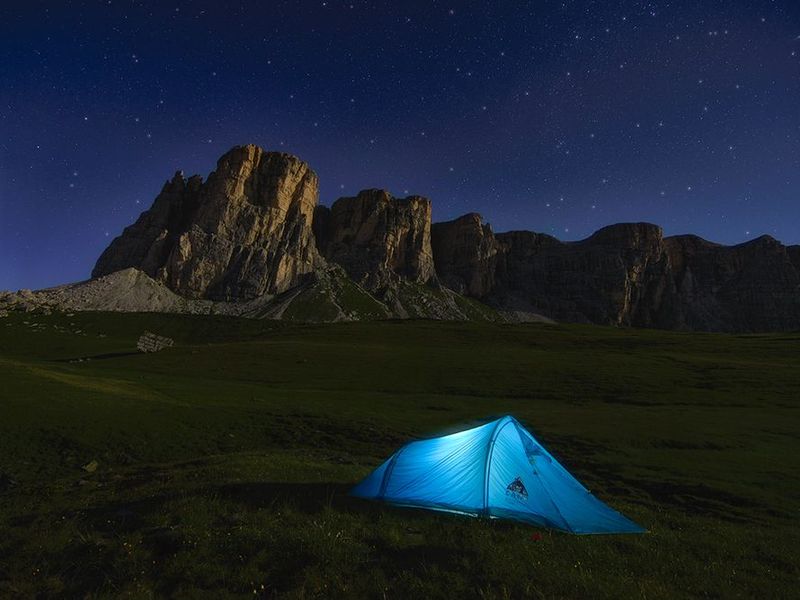
A backcountry permit is not the same thing as a day-hike permit, and treating them as interchangeably is how first-time backpackers waste months. A backcountry permit authorizes you to camp overnight — off the road, off the campground grid, in designated wilderness zones. Two of the most instructive systems in the United States are on opposite ends of the logic spectrum: Denali in Alaska, which gives permits away for free on a walk-up basis, and the Grand Canyon, which runs a monthly national lottery. Understanding both teaches you almost everything you need to know about wilderness permits anywhere.
If your first overnight backpacking trip into a national park is on the calendar, start here.
What is a backcountry permit, anyway?
National parks divide overnight use into two buckets. Frontcountry campgrounds — developed sites with tables, fire rings, often water and flush toilets — are reserved through recreation.gov or the park concession. Backcountry zones are the rest: trails, canyons, tundra and desert where you carry everything, dig or pack out waste, and camp in designated spots. Because these areas are fragile, every park caps how many people may camp in each zone each night. The permit is that cap, applied to you.
The fee structure is usually two layers: a small non-refundable application or reservation fee, plus a per-person-per-night wilderness fee. Some parks (Denali being the famous example) charge neither for ordinary backpacking — only the entrance fee and transport costs.
Denali: the free, walk-up unit system
Denali National Park is the model for the opposite philosophy. There is no advance lottery and no permit fee for ordinary backcountry backpacking. The park is divided into 58 backcountry units, each with its own nightly quota, and you obtain your permit in person at the Backcountry Information Center (BIC) in Denali Park Village. Critically, permits are issued no more than one day before your trip starts — you cannot lock in a unit weeks ahead.
The real cost of a Denali backcountry trip is therefore not the permit. It is the $15 park entrance fee (waived for children and covered by an annual pass) and the mandatory camper bus ticket that takes you into the road corridor beyond the private-vehicle limit. Plan to arrive at the BIC early on the day before your hike, especially in June and July, because the most popular units fill by mid-morning. You will also sit through a short orientation covering bear safety, food storage (hard-sided "Clean Mountain Cans" are required), and river fording.
Note the important exception: climbing Mount Denali (McKinley) itself, or nearby Mount Foraker, is not a backcountry permit. It is a separate mountaineering registration with a $450 adult fee (2026), required at least 60 days in advance through Pay.gov, with youth pricing and full gear requirements. That is a different undertaking entirely.
Grand Canyon: the rolling 4-month lottery
The South Rim side of Grand Canyon National Park runs the opposite system. Overnight use below the rim — along the Bright Angel, South Kaibab, and North Kaibab trails, into campsites like Bright Angel Campground and the backcountry zones beyond — is allocated through a monthly lottery on recreation.gov.
The mechanics are a rolling schedule:
- Opens the 1st of the month, four months before your desired start date (e.g. apply February 1 for a June trip).
- Closes on the 5th of that same month.
- Results are issued by the 25th.
- Application fee: $10 non-refundable, regardless of whether you win.
Once awarded, the nightly cost is $15 per person below the rim (refundable until 30 days before the trip) and $4 per person above the rim. Estimated odds are around 20%–40% for Bright Angel corridor camps, but Phantom Ranch dorms and cabins are a different story — those are booked by the concessionaire Xanterra roughly 15 months in advance and sell out within minutes of release, with odds below 1% on opening day. They are not part of this NPS lottery.
Choosing your zone and dates
For first-timers, the Bright Angel corridor is the sensible choice: water sources, marked trails, and other hikers within shouting distance. More remote zones (the Thunder River trail, the Nankweiup route) are stunning but demand real navigation skills and self-sufficiency. Peak demand is March through April and October, when the weather is bearable. Summer below the rim is hot — Phantom Ranch sits 2,400 feet below the rim in a climate comparable to Phoenix — and winter brings ice on the upper trails. Aim for shoulder-season weekdays.
Cancellation and refund rules
Grand Canyon permits below the rim are refundable until 30 days before your start date; inside that window they are forfeit. Denali walk-up permits are free, so there is nothing to cancel, but no-shows do not free up a unit for the next day in the same way — the park allocates quotas as people arrive. A common strategy at both parks is to monitor the cancellation pool: at the Grand Canyon, returned permits reappear in the next monthly drawing; at Denali, showing up early in the morning after a cancellation frees a unit.
Common mistakes
The biggest error is confusing the two systems. People show up at Denali expecting to book a backcountry permit online months ahead (they cannot), or they treat the Grand Canyon lottery like a first-come reservation (it is not). Other frequent slip-ups: forgetting that Phantom Ranch is booked through Xanterra, not recreation.gov; underestimating desert water needs below the rim (carry and treat, never drink from the Colorado River without planning); and, at Denali, assuming the free permit means no cost — the camper bus and entrance pass still apply.
Key takeaways
- Denali backcountry permits are free, walk-up at the BIC, issued only one day ahead, allocated by 58 units.
- Grand Canyon backcountry lottery opens the 1st, closes the 5th, results by the 25th, four months ahead; $10 application fee.
- Nightly fees: $15/person below the rim (refundable until 30 days out), $4/person above the rim.
- Phantom Ranch dorms/cabins are a separate Xanterra booking 15 months out — not part of the NPS lottery.
Frequently asked questions
Can I get a Denali backcountry permit without being physically in Alaska?
What are my odds in the Grand Canyon lottery?
Do I need a permit just to hike below the rim for the day?
Sources: NPS Denali – backpacking FAQs and mountaineering page; NPS Grand Canyon – backcountry permit page; recreation.gov permit 4675337; Xanterra Grand Canyon Lodges (Phantom Ranch). Figures verified October 2026; fees and unit quotas change — confirm on official pages before travel.
荒野许可(backcountry permit)和日归徒步许可不是一回事,把它们混为一谈,是新手背包客浪费好几个月的原因。荒野许可是授权你——不在公路边、不在营地里——在指定荒野区过夜露营的凭证。美国最有代表性的两套系统在逻辑光谱的两端:阿拉斯加的 Denali(迪纳利)免费现场办许可;大峡谷则跑全国性的月度抽签。搞懂这两套,你就基本掌握了任何国家公园荒野许可的全部要领。
如果你把人生第一次国家公园过夜徒步排进了日程,从这篇开始。
荒野许可到底是什么?
国家公园把过夜使用分成两类。前country营地(frontcountry)是开发营地:有桌子、火圈,常有水和冲水厕所,通过 recreation.gov 或公园 concession 预约。荒野区(backcountry)是其余部分:小径、峡谷、苔原与荒漠,你自己背齐全部装备、挖厕或打包带走垃圾,在指定点位露营。因为这些区域脆弱,每个公园都会限定每区每晚的人数上限。许可就是那个上限,落到你头上的那一张。
费用通常分两层:一笔小额不退的申请/预约费,加上按人按晚收的荒野费。也有公园(最著名的就是 Denali)对普通背包这两项都不收——只收入场费和交通成本。
Denali:免费、现场办理的"单元"系统
Denali 国家公园是另一种哲学的样板。普通荒野背包没有提前抽签、不收许可费。公园被划成 58 个荒野单元,每个单元有自己的每晚配额,许可要你本人到 Denali Park Village 的"荒野信息中心(BIC)"现场办。关键是:许可最多只能在徒步开始前一天签发——你没法提前几周锁定某个单元。
因此 Denali 荒野行的真实成本不在许可,而在 $15 公园入场费(儿童免费、年卡覆盖)和必须乘坐的 露营巴士票——它把你送进社会车辆禁行的道路段。计划在徒步前一天一早抵达 BIC,尤其 6、7 月最热门的单元上午就满了。你还要参加一段简短的说明会,内容包括熊安全、食物储存(强制使用硬壳"Clean Mountain Can"熊罐)和涉溪渡河。
注意一个重要例外:攀登 Denali(麦金利山)主峰或附近的 Foraker 峰,不走荒野许可。那是单独的登山注册,2026 年成人费 $450,须至少提前 60 天通过 Pay.gov 注册,另有青年价和全套装备要求,完全是另一回事。
大峡谷:滚动 4 个月抽签
大峡谷南缘一侧走的是相反的系统。峡谷底部的过夜使用——Bright Angel、South Kaibab、North Kaibab 沿线,Bright Angel 营地及更远荒野区——通过 recreation.gov 上的月度抽签分配。
机制是滚动日程:
- 开放:目标出发日的前 4 个月、当月 1 日(例如 2 月报 6 月行程)。
- 截止:当月 5 日。
- 出结果:当月 25 日前。
- 申请费:$10 不退,无论中不中。
中签后,峡谷底部每晚 每人 $15(出发前 30 天前可退),峡谷缘以上 每人 $4。Bright Angel 走廊营地估计中签率约 20%–40%,但 Phantom Ranch 宿舍和小木屋完全是另一回事——由 concessionaire Xanterra 提前约 15 个月发售、开放几分钟内售罄,开放日当天中签率不足 1%。它们不走这个 NPS 抽签。
如何选区、选日期
对第一次背包的人,Bright Angel 走廊是稳妥选择:有水源、有标记、喊一声就能遇到其他徒步者。更远的单元(Thunder River 步道、Nankweiup 线)极美,但要求真正的导航能力和自给自足。需求高峰在 3–4 月和 10 月——天气可承受的时候。夏季峡谷底部酷热(Phantom Ranch 比谷底还低 2400 英尺,气候接近凤凰城),冬季上步道结冰。优先选过渡季的工作日。
取消与退款规则
大峡谷谷底许可在出发前 30 天之前可退,进入 30 天窗口后作废。Denali 现场免费,没有可退的东西,但爽约也不会像预约系统那样第二天把单元让给别人——公园是按到达顺序分配配额。两个公园的共同捡漏策略是盯取消池:大峡谷退回的许可会进入下一轮月抽;Denali 则在早上有人取消后尽早到 BIC。
常见错误
最大的错误是把两套系统弄反:有人跑到 Denali 想提前几个月在线订荒野许可(不行),或者把大峡谷抽签当成先到先得的预约(不是)。其他高频坑:忘了 Phantom Ranch 是找 Xanterra、不是 recreation.gov;低估峡谷底部的饮水量(要自带并净化,绝不能不处理就喝科罗拉多河水);以及在 Denali 以为免费就等于零成本——露营巴士和年卡照样要。
要点速记
- Denali 荒野许可免费、BIC 现场办、最多提前一天签发、按 58 个单元分配。
- 大峡谷荒野抽签:当月 1 日开、5 日截止、25 日前出结果、提前 4 个月;申请费 $10。
- 每晚费用:谷底每人 $15(出发前 30 天可退),缘上每人 $4。
- Phantom Ranch 宿舍/小木屋是 Xanterra 提前 15 个月单独发售,不属于 NPS 抽签。
常见问题
人不在阿拉斯加能拿到 Denali 荒野许可吗?
大峡谷抽签我的中签率大概是多少?
只是到南缘下面走日归,也要荒野许可吗?
资料来源:NPS Denali——背包常见问题与登山页面;NPS 大峡谷——荒野许可页面;recreation.gov 许可 4675337;Xanterra Grand Canyon Lodges(Phantom Ranch)。数据核实于 2026 年 10 月;费用与单元配额会变动,出行前请以官方页面为准。
Half Dome vs Mt Whitney半圆顶 vs 惠特尼峰
Read →阅读 →
2026–27 Lottery Calendar全年抽签日历
Read →阅读 →
BLM vs National ForestBLM 与国有林
Read →阅读 →Start tracking your next permit开始追踪你的下一个抽签
Check open windows, deadlines and odds — free, bilingual, offline-ready.查开放窗口、截止日与中签率——免费、双语、断网可用。
Open the lottery calendar打开抽签日历